Muscle Testing as Biofeedback
The manual muscle test is used as a complementary instrument and is evaluated in connection with the consultation and other examination findings.
Therapy Method in Potsdam
Manual muscle tests serve as a biofeedback instrument and are placed alongside other findings within a comprehensive treatment concept.
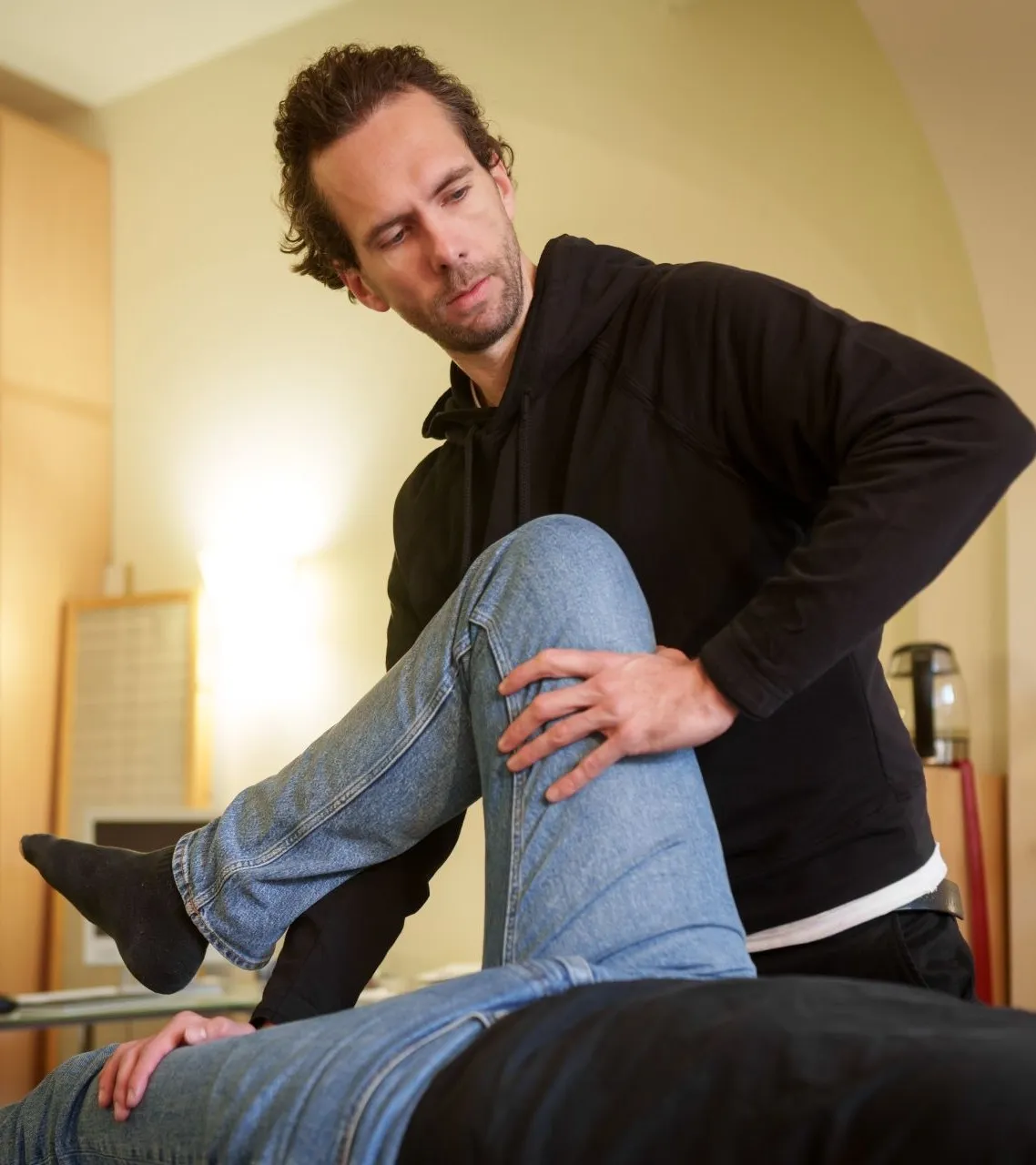
Applied Kinesiology (AK) is a holistic diagnostic method that uses the muscle test as a biofeedback instrument. Precise muscle testing can reveal functional disturbances in the body and help identify their causes. This method makes it possible to recognise and address the connections between muscles, organs, metabolism and the meridian system. Particularly valuable is the possibility of immediately checking the effectiveness of the chosen therapy. In the practice, AK is combined with other forms of therapy to create a comprehensive treatment concept. The method helps to select the most effective therapeutic approaches for the individual case. By integrating Applied Kinesiology, complaints can often be addressed more quickly and in a more targeted way, because the causes of the problems can be identified more precisely and the therapy adjusted accordingly.
The manual muscle test is used as a complementary instrument and is evaluated in connection with the consultation and other examination findings.
In the practice, Applied Kinesiology is not viewed in isolation; it can support the selection and verification of further therapeutic approaches.
In my work, the muscle test is a very useful diagnostic tool for finding the appropriate treatment of the underlying causes. It can provide indications of disturbances that might go unnoticed in a purely local examination, even though they influence back pain or other problems, for example.
In addition, the response of a muscle can give indications of how resilient your body is under certain conditions.
Not in isolation. The result is always placed in the overall context of your history, the physical examination, existing findings and, where appropriate, medical, dental or laboratory diagnostics.
The muscle test is therefore one part of the integrative examination and not a substitute for necessary medical evaluations.
Applied Kinesiology serves first of all as a diagnostic tool. It is intended to help identify relevant influencing factors and to select the appropriate treatment on that basis.
Afterwards, it can be tested again whether the chosen measure has changed the muscle response and thus one aspect of the body's resilience.