Freedom from pain
Working, reading, sleeping or driving without your neck constantly demanding your attention.
Condition
Individual neck treatment in Potsdam
Creating the conditions for you to move your head, neck and shoulders freely and naturally again – at work, in everyday life and in sport.
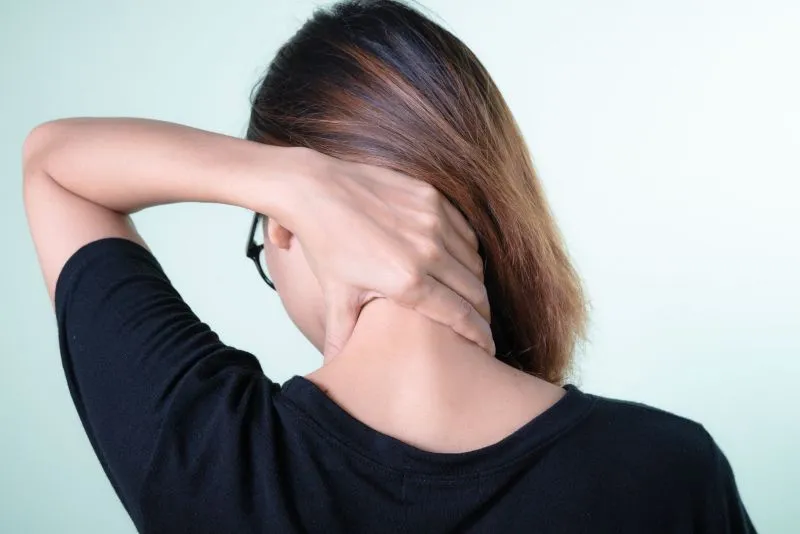
Looking at the whole person
Neck pain can present itself in very different ways. Perhaps your neck makes itself felt after a long working day, in the morning after getting up or when turning your head. Perhaps the tension radiates into the shoulders or head. Some people find that massages, exercises or a different pillow help briefly, but the problems keep coming back.
That is why my focus is not only on the tense or painful spot. I want to understand how your body as a whole contributes to your current situation: Which areas are performing less than they actually should? Which structures are permanently overloaded as a result? What role do the ribcage, shoulders, jaw, teeth, old injuries, stress or processing by the nervous system play? Step by step, a personal map emerges of the factors that influence your neck.
The goal is not solely to reduce the current tension. You should be able to turn your head freely again, work with concentration, sleep peacefully and carry out overhead movements or sport naturally. At the same time, you learn to interpret your reactions better and to adjust exercises on your own – so that you gradually become your own "little therapist".
Goals of treatment
Working, reading, sleeping or driving without your neck constantly demanding your attention.
Turning your head freely and safely when checking over your shoulder, cycling or doing sport.
Carrying bags, training and performing overhead movements and overhead work without neck and shoulders tiring prematurely.
Moving more fluidly again when getting dressed, turning, reaching into an upper shelf or doing sport, instead of having to turn head and upper body cautiously as one unit.
Feeling more secure again when walking, turning quickly and doing sport. The neck provides important information for balance and spatial orientation.
Working with concentration for longer, training and coping with physical tasks while the neck reliably supports movement again.
Is this right for me?
The treatment is particularly aimed at people
Typical situations
Perhaps you recognise yourself in one or more of these situations:
From examination to self-help
At the beginning, we look at when your neck makes itself felt, which movements come easily and which activities you would like to pursue again without concern. Existing findings, previous injuries and past treatments are taken into account.
The whole body is examined, with particular focus on the cervical spine, ribcage, shoulders and jaw. Dental problems, stress, breathing and previous injuries can also be considered. What matters is which factors actually affect your movement, strength or tension.
The treatment is derived from the results of the examination. Depending on the situation, manual treatment, fascial therapy and targeted exercises for mobility, strength, orientation and balance can be combined.
You receive exercises that are initially selected and guided specifically for your situation. Over time, you learn to adjust intensity, frequency and scope to everyday life, daily form and sporting goals.
Deciding well informed
Usually a particular posture is not the actual problem. What often matters is static load: the body has to hold one position almost unchanged for a long time.
The body is not made to remain in a single position for long periods. It benefits from regular movement, frequent changes of position and occasional vigorous loading. The goal is therefore not to adopt a supposedly perfect posture permanently. Your body should be able to cope well with different sitting, working and movement positions again.
A massage can temporarily reduce tension. If underlying disturbances remain, however, it can build up again. These may include, for example, restricted ribcage mobility, TMD, clenching or grinding, dental problems or, in individual cases, inflammation in the tooth and jaw area.
These factors are not automatically the cause. They are included in the personal map and then checked to see whether they actually affect your neck.
A suitable pillow can make lying down more comfortable and reduce symptoms at night. The long-term goal of therapy, however, is to restore the mobility and load tolerance of the neck to the point where it tolerates different sleeping positions better and is not permanently dependent on a single position.
Yes. Jaw and neck work closely together in space and function. Clenching, grinding, restricted jaw movement, a changed bite or dental problems can therefore be relevant.
Whether this connection applies in your case must be clarified through examination and, where appropriate, dental diagnostics.
Sport and exercises should be adjusted so that they develop the neck without irritating it unnecessarily. As a rough guideline, intensity during the activity and afterwards should preferably not rise above 3 out of 10. Weight, duration, range of motion and number of repetitions should be adjusted accordingly.
If you are unsure or have new or unusual symptoms, you should coordinate the load with a therapist, doctor or other healthcare professional.
This cannot be reliably determined in advance. However, a noticeable change should become apparent after about four treatments – for example when turning the head, working, sleeping or doing sport. It is then reviewed whether the approach taken so far makes sense or should be adjusted.
Read more