Freedom from pain
Working, sleeping, carrying and moving while the affected region of the body quietly does its part again.
Condition
Individual treatment in Potsdam
Creating the conditions for your body to move freely, powerfully and naturally again – in everyday life, at work and in sport.
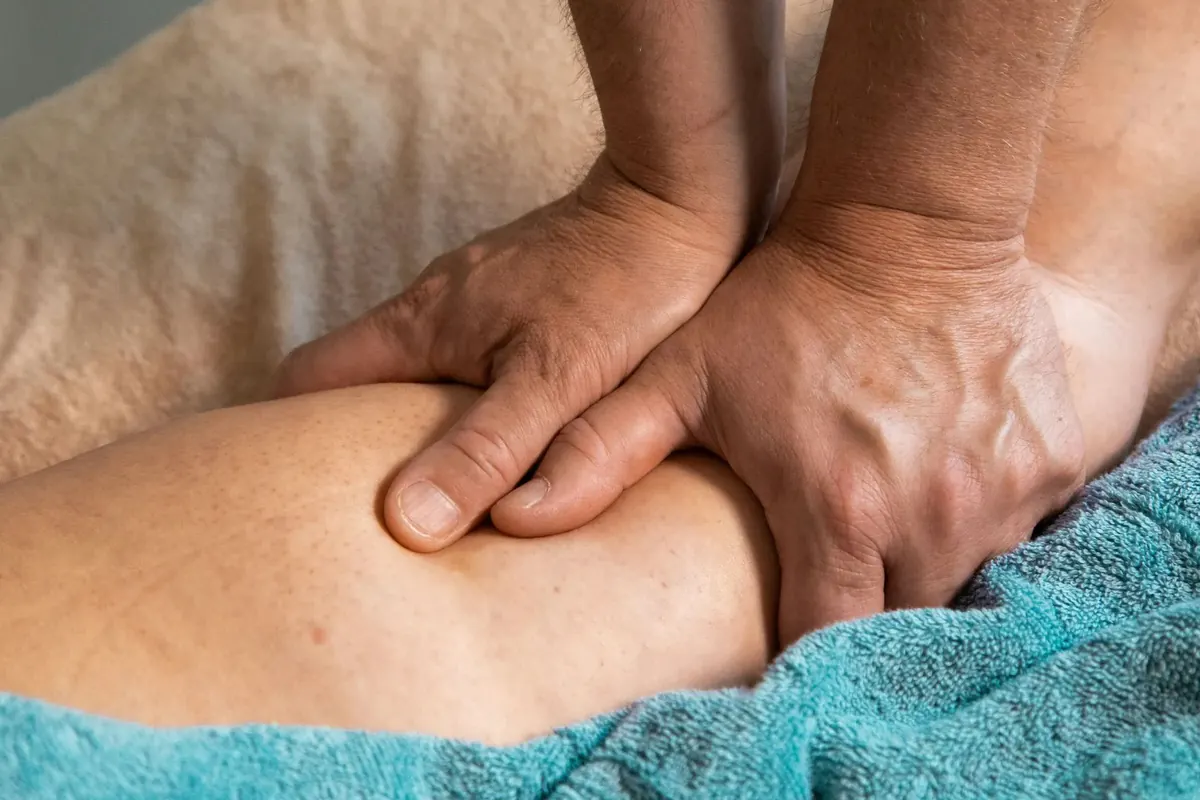
Looking at the whole person
Perhaps your elbow makes itself felt when gripping, your wrist at work, your ankle when walking, or a muscle keeps acting up during certain movements. Sometimes the problem appears suddenly, sometimes it develops over a longer period. Even after an injury, the feeling can remain that a region of the body has not yet regained its former strength, mobility or sense of security.
That is why my focus is not solely on the spot where you feel something. I want to understand how your body as a whole contributes to your current situation: Which areas are performing less than they actually should? Which structures lack sufficient load tolerance over time? What role do fascia, joints, muscles, the nervous system, old injuries or other physical influences play? Step by step, this creates a personal map as the basis for targeted treatment.
The goal is not only to reduce the current symptoms. It is about regaining freedom of movement, strength, suppleness, balance and trust in your own body. You receive specially selected exercises and, over time, learn to adjust them independently to your progress – so that you increasingly become your own "little therapist".
Goals of treatment
Working, sleeping, carrying and moving while the affected region of the body quietly does its part again.
Gripping, turning, stretching, bending, walking or standing up – with a range of motion that makes everyday life easier again.
Opening a bottle, carrying shopping bags, supporting yourself, pulling, pushing or moving weights again safely and with confidence.
Performing everyday and athletic movements fluidly again, while joints, muscles and fascia noticeably work together more easily.
Handling changing surfaces, fast movements and unexpected loads with more security and control again.
Pursuing work, gardening, manual tasks, hobbies and sport again with more endurance, precision and enjoyment.
Is this right for me?
The treatment is particularly aimed at people
Typical situations
Perhaps you recognise yourself in one or more of these situations:
From examination to self-help
At the beginning, we look at which movements cause the affected region to make itself felt, what has already been tried and which tasks it should be able to take on again in the future. Existing medical findings, surgeries and previous injuries are taken into account.
The whole body is examined, with particular focus on the affected region and the structures directly involved. For an elbow problem, for example, the wrist, shoulder, neck and torso can be relevant; for an ankle, additionally the foot, knee, hip and pelvis.
The examination looks at where mobility, strength, suppleness or control are lacking and which structures cannot yet adequately cope with the demands placed on them. What matters is not every finding, but only what actually influences your specific movement and symptoms.
The treatment is derived from the results of the examination. Depending on the situation, manual therapy, fascial therapy, the treatment of individual muscles and targeted exercises for mobility, strength, balance and coordination can be combined.
Depending on your personal map, fascial therapy can be useful to first improve mobility and tissue suppleness and to make the subsequent build-up of load easier. The measures are reviewed over time and adapted to your body's progress.
You receive exercises that are specially selected for your situation and initially taught in detail. Over time, you learn to adjust intensity, frequency, range of motion and number of repetitions on your own.
This allows you to respond appropriately to changes, increase your load tolerance step by step and increasingly become your own "little therapist".
Deciding well informed
Not necessarily. The area where something is felt is important, but it does not have to be the only region involved. An elbow, for example, is also influenced by the hand, shoulder and neck; an ankle works together with the foot, knee, hip and torso.
That is why the whole body is examined – with particular focus on the affected region and its immediate surroundings. What matters is whether a suspected connection can be verified in practice during the examination.
In the case of an acute irritation, it can make sense to temporarily adjust the load. The long-term goal, however, is not for the region to have to do less and less. It should become so mobile, strong and resilient again that everyday life, work and sport are possible as a matter of course.
To achieve this, a well-tolerated level of load is chosen first and then increased step by step.
Often it is less a problem of load and more a problem of load tolerance. A specific movement, a heavy object or a supposed "wrong lift" can be the occasion on which the problem shows itself. However, they are usually not the actual cause.
Many measures initially calm the affected spot or avoid the triggering movement. That can be helpful in the short term. In the long term, however, strength, mobility, suppleness, balance and coordination should be improved to the point where the movement in question becomes possible and even comfortable again.
X-ray or MRI images are important and are included in the examination. However, visible changes often do not sufficiently explain why a person is limited.
Degenerative changes can often be well integrated by a well-functioning and resilient body. An image shows certain structures, but not fully how a joint functions at work, in everyday life or during sport. That is why the finding is assessed together with your movement, strength, mobility and specific situation.
Imaging techniques show some structures very well, others only to a limited extent. They also do not show how forces are distributed when walking, gripping, lifting or training, and how the body regions involved work together.
An unremarkable finding therefore does not mean that there is nothing to examine or improve therapeutically. The affected region should additionally be analysed in movement and in the context of the whole body.
Unfortunately, I cannot answer that in general terms. Similar symptoms can have very different physical preconditions. A region may need more mobility, more strength, better balance or a different dosage of load.
That is why exercises are first selected and taught to match your personal map. Depending on the findings, fascial therapy can also be useful to improve mobility and tissue suppleness. Later, you learn to adjust duration, intensity and number of repetitions independently to your progress.
Sport and exercises should be adjusted so that they develop the affected region without irritating it unnecessarily. As a rough guideline, the intensity during the activity and afterwards should preferably not rise above 3 out of 10.
Weight, speed, range of motion, training duration and number of repetitions can be adjusted accordingly. If you are unsure, you should coordinate the load with a therapist or doctor.
This cannot be reliably determined in advance. The duration depends, among other things, on your history, the structures involved and your personal goals.
However, a noticeable change should become apparent after roughly four treatments at the latest – for example when gripping, walking, carrying, moving or doing sport. Afterwards, it is reviewed which assumptions have been confirmed and whether the treatment approach should be adjusted.
Read more