Freedom from pain
Climbing stairs, standing up or walking longer distances while the knee accompanies the movement unobtrusively again.
Condition
Individual knee treatment in Potsdam
Creating the conditions for your knee to handle stairs, hikes, training and everyday demands naturally again.
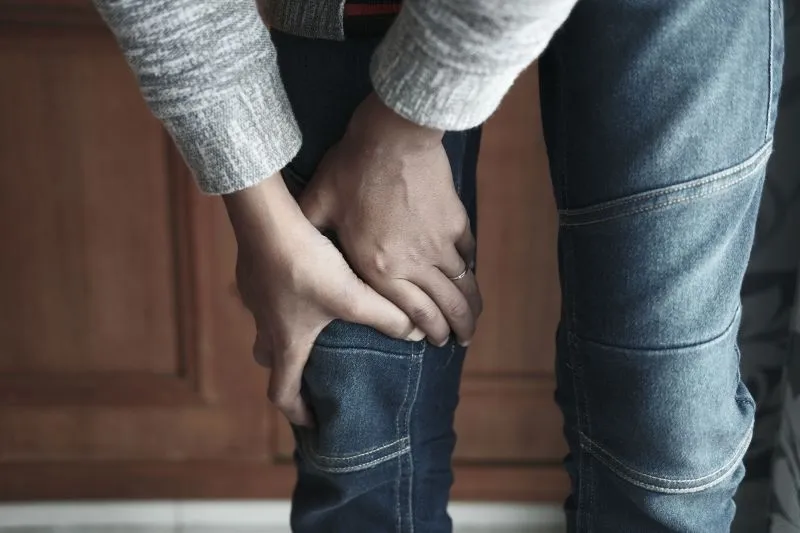
Looking at the whole person
Knee pain can occur when climbing stairs, standing up, running or after sitting for a long time. Perhaps the knee only makes itself felt after a certain distance, or during squats, changes of direction or hikes. Some people gradually cut back on their activities because they do not know which loads help the knee and which currently overwhelm it.
The knee, however, does not work alone. The foot, ankle, hip, pelvis and trunk help determine which forces reach the knee and how well they are processed. This is why the examination produces a personal map: which areas can do less than they actually should? Which structures are overloaded as a result? What role do previous injuries, mobility, strength, suppleness, balance and the interplay of the whole body play?
The goal is not merely to calm the knee. You should be able to take the stairs naturally again, kneel down, cover longer distances and pursue your sport with confidence. At the same time, you learn to adapt loads and exercises independently as you progress.
Goals of the treatment
Climbing stairs, standing up or walking longer distances while the knee accompanies the movement unobtrusively again.
Bending and straightening the knee naturally, squatting down or being able to kneel.
Getting up from a chair, walking uphill, jumping and loading the affected leg fully and with confidence again.
Walking, running and changing direction while knee, hip and foot work together fluidly.
Handling uneven ground, quick changes of direction and varying surfaces safely and with control again.
Jogging, hiking, cycling, football, tennis or strength training – with confidence in the strength and stability of your knee.
Is this right for me?
The treatment is particularly aimed at people
Typical situations
Perhaps you recognise yourself in one or more of these situations:
From examination to self-help
We look at when the knee makes itself felt, which loads it tolerates well and which activities you want to take up again. Existing findings, surgeries and previous injuries are taken into account.
The whole body is examined, with a particular focus on the knee, foot, ankle, hip, pelvis and trunk. This makes it possible to identify where mobility, strength, balance or control are lacking and what causes the knee to be overloaded during certain tasks.
Depending on the findings, manual treatment, fascial therapy and a targeted build-up of strength, mobility, suppleness, balance and sport-specific movements can be combined.
You receive exercises selected specifically for your situation. Over time, you learn to adjust distance, weight, intensity and number of repetitions on your own and to continue your build-up independently.
Deciding well informed
A temporary adjustment can make sense when the knee is strongly irritated. In the long term, however, the knee should not have to do ever less, but gradually be able to do more again.
To achieve this, a load is chosen that is currently well tolerated. Strength, mobility and control are then built up so that stairs, sport and everyday life become naturally possible again.
MRI scans are images that show some structures of the knee – but not all of them. Above all, they do not show how your knee moves when walking, climbing stairs, jumping or running.
Existing images should therefore always be taken into account, but in a therapeutic context the knee should additionally be analysed in motion. This also makes strength, movement control and the interplay with the hip and foot visible.
Yes. If, for example, the ankle does not allow enough of a movement or the hip does not guide the leg securely, the knee has to process the load differently.
This does not mean that the hip or foot is automatically the cause. The connection must be demonstrated comprehensibly in the examination and through a targeted change.
I cannot answer that in general terms. A knee may need more strength, more mobility, better balance or a different dosing of load.
Exercises are therefore selected to match your personal map and initially taught in detail. Later, you should be able to adjust weight, intensity and number of repetitions on your own.
Training can often be continued in an adapted form. Distance, speed, weight, depth of movement and number of repetitions should be chosen so that the intensity during and after training ideally does not rise above 3 out of 10.
If you are unsure, you should discuss the further approach with a therapist or doctor.
After about four treatments, a first change should be noticeable – for example on the stairs, when standing up, during training or over a certain running distance. After that, it is reassessed which factors are still relevant and what the further build-up should look like.
Read on